Investigation into “suspicious” deaths in Europe
Sloppy analyses, restricted information and judicial sluggishness
Source: StreetPress
< image ©Léa Guiraud - Kiblind.
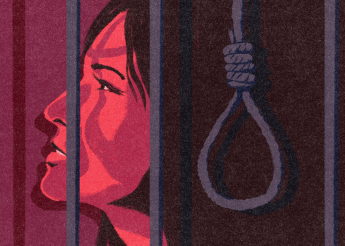
On 7 June, 26-year-old Amélie Makiadi called Fleury-Mérogis Prison in France. She wanted to confirm her visit scheduled for that afternoon with her brother Aubin. After about 30 minutes, a voice told her: “Oh, no, your brother passed away.” In the blink of an eye, Amélie Makiadi lost her closest companion – “People called us Chip and Dale”. Although the prison service ruled the death a suicide, his younger sister suspected assault: “Several incarcerated people heard him cry out and get beaten the night of his death”, she says. At the morgue, she discovered his swollen face and marks on his shoulders. “I was able to identify him by the star-shaped pattern he had in his hair: I was the one who braided it.” Their family has since filed a complaint against the facility. Five months later, the investigation is still ongoing, and the family is desperately waiting for the detailed autopsy report.
Over a thousand kilometres from France, the Duduianu family is also waiting for answers. In front of Rahova Prison in Romania, where nearly 1,500 people are locked up, two cottages stand side by side. From their cream-coloured façades, the portraits of two men stare at passers-by, one of whom explains: “Everyone knew them here.” Laurentiu, 36 years old, better known as “Ciprian Pian”, one of the leaders of the Pian clan, died in June at Jilava Prison, south of Bucharest, after reporting chest pain that went untreated. A few weeks later, 42-year-old Nicusor, another leader of the Pian clan, collapsed while leaving the medical centre at Rahova Prison. His heart pain was also ignored. Their loved ones spoke of “suspicious conditions” and are considering taking legal action against the correctional facilities.
According to legal precedent from the European Court of Human Rights, each death in prison is considered suspicious and must undergo an independent judicial investigation. Numerous families feel this is insufficient and call for greater transparency, as many of them are kept in the dark. Some families have denounced the shortcomings that led to these deaths that occurred while their loved ones were under the responsibility of the state. Others have blamed the security staff directly. After exploring the issue of suicide in detention, this second part focuses on another dark aspect of prison: the deaths that occur in murky circumstances and about which families have trouble obtaining clear answers.
StreetPress, in partnership with Prison Insider, travelled to a few European countries with high mortality rates in detention – France, Romania and Hungary – to investigate these deaths that have been deemed “suspicious”. The silence faced by StreetPress revealed the extent of the omerta around the deaths for which the prison service could be implicated. The questions were dismissed; the visit requests, denied.
Investigation into deaths in European prisons
This investigation is divided into two parts: the first explores the suicides in detention linked to the lack of psychological care and the imprisonment conditions; the second focuses on suspicious deaths, which have more to do with the institutional violence in the prisons of France, Romania and Hungary.
This article was produced by StreetPress, in collaboration with Prison Insider, as part of the Unmasking truth project, with financial support from the European Media and Information Fund.
In 2024, the Hungarian Helsinki Committee received 660 complaints, including 21 for ill-treatment.
In front of Budapest Prison (Hungary), Maria, barely 20 years old, is bundled up in a black down jacket. She is waiting her turn, her eyes focused on the entrance. Her husband has been incarcerated for two years. “Last time, he told me that a guard had struck him because he had participated in a protest with other incarcerated people for more food”, she says worriedly. In 2024, the Hungarian Helsinki Committee – a non-governmental human rights organisation – received 660 complaints concerning prisons in Hungary, including 21 for ill-treatment.
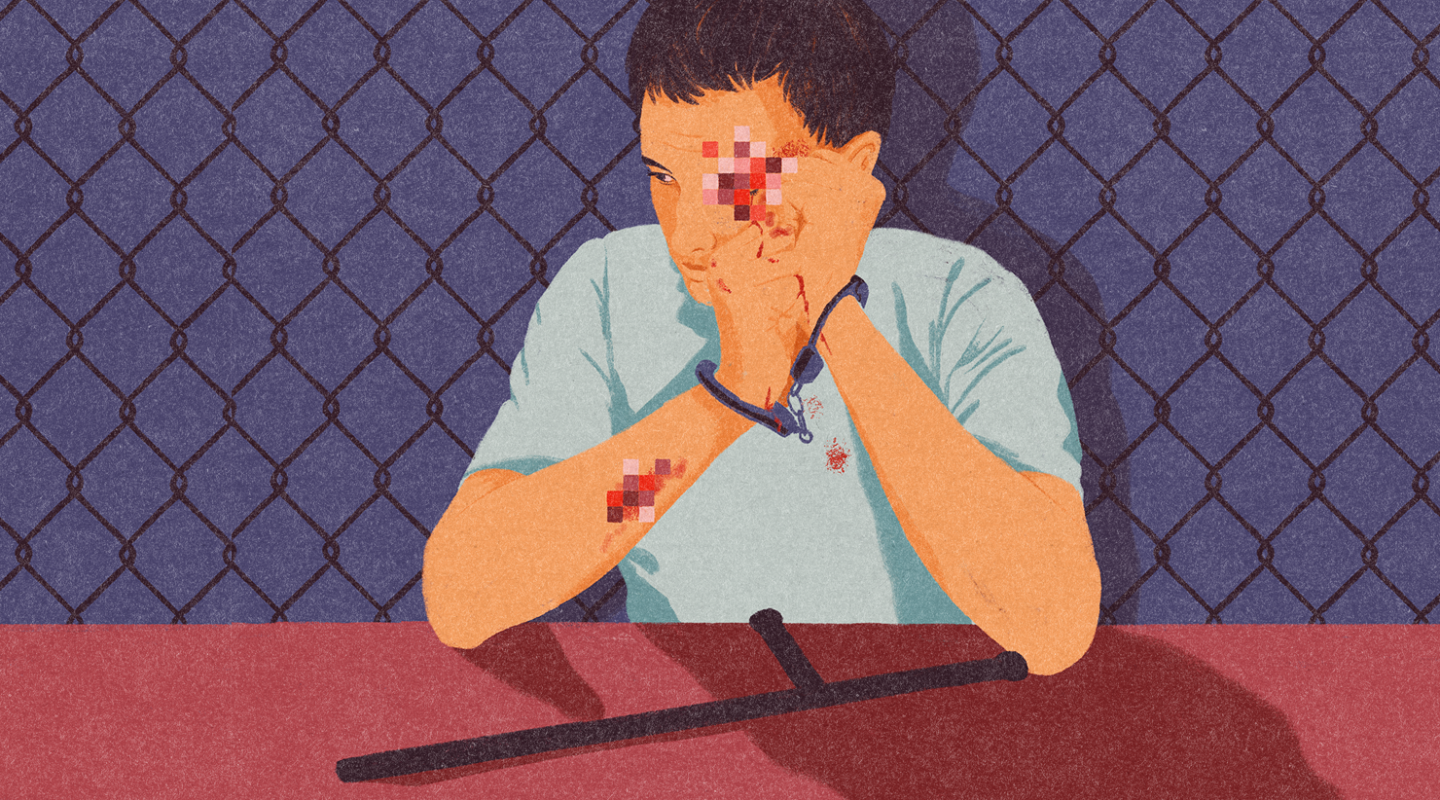
Gabor Gyozo, a lawyer at the Committee, noticed “a slight increase in reports of physical violence in recent years”. At Tiszalök Prison, in northeastern Hungary, the European Committee for the Prevention of Torture (CPT) identified “numerous credible allegations of ill-treatment” in 2024. That is where 34-year-old Balazs reportedly saw incarcerated people being assaulted by officers. “I was afraid for him”, his mother Safia confides, terrified. It seems the climate of fear is a daily reality there: “One day, when he had a fever, a guard forbid him from bundling up”, she adds. The Committee requests that “each incarcerated person who reports ill-treatment be promptly examined by an independent physician and that special security measures only be considered on an exceptional basis”.
In France, the Controller-General of Places of Deprivation of Liberty noted that in 2025, interactions between incarcerated people and guards were the subject of 229 reports, including 79 for violent incidents. “At the Tarbes remand prison, there was a cell – 130 – set aside for roughing up incarcerated people. I thought those practices had been left in the past, in the penitentiary system of forty years ago!” says the Controller-General, Dominique Simonnot, indignantly. “Guards sometimes react disproportionately when they respond to an assault by an incarcerated person, but the abuse still remains very unpredictable and difficult to evaluate”, argues the national secretary of the French penitentiary union UFAP-UNSa Justice, Wilfried Fonck.
In Romania, Iacob, 36 years old, describes a similar situation at Giurgiu Prison in the south of the country, where he was held from 2009 to 2015: “There was a cell where my peers were beaten and humiliated, both physically and mentally. In 2013, two incarcerated people were beaten to death by staff members for various offences. Some incarcerated people say this abuse still happens today.” In 2022, the CPT gathered verbal evidence reflecting repeated blows to the soles of the feet – a torture method called “falaka”. The committee stresses “the importance of documenting the wounds by medical staff and close monitoring by the prosecutor”.
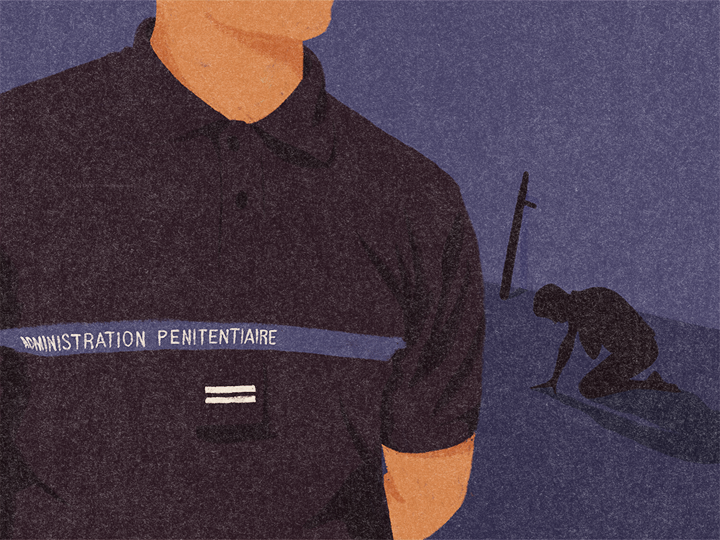
In Romania, masked intervention units, “the mascati”, appeared in the 1990s.
“We feel as though we’re fighting mountains.”
Gaspar did not dare to file a complaint against a guard who he says beat him until after his release in 2021.
Ineffective cameras?
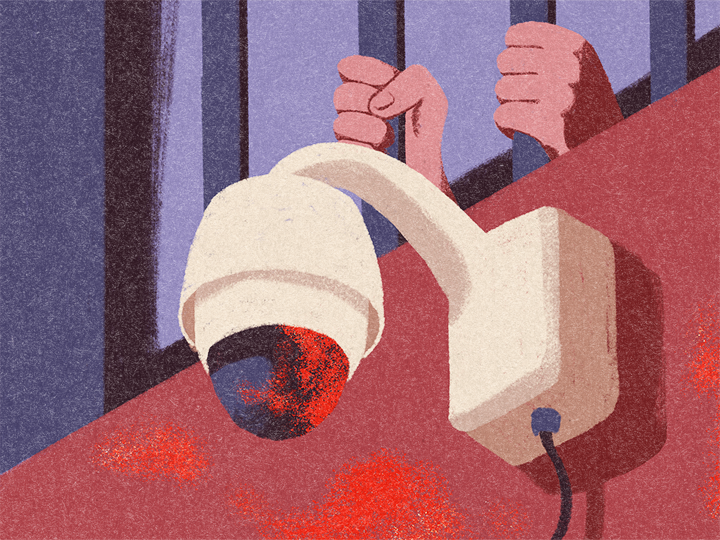
In Hungary in 2023, one incarcerated person reportedly suffered ill-treatment in his cell while the corridor was filmed by two security cameras. His lawyer Gabor Gyozo believed this was a stroke of luck – until he obtained the footage: “Several seconds were missing from the recordings. An expert concluded that it had been tampered with.” In France, there is no established minimum time that recordings must be kept. “And when we manage to recover them, we often receive a video excerpt showing just the discovery of the body, which does not enable us to observe the events that transpired beforehand”, explains the lawyer Vincent Scuderoni. According to several sources, surveillance officers could also attempt to protect themselves by disabling the cameras, erasing surveillance footage or establishing a corroborative depiction of events to impose a single narrative.
In Romania, Andrei, who was incarcerated from 2002 to 2024, believes that beatings have become less frequent “thanks to the installation of cameras”. Ioan Durnescu, a criminologist and professor at the University of Bucharest, adds that in 2024, “10% of the personnel in direct contact with incarcerated individuals received training on incident management”.
In Sopronkohida, near the Austrian border, it was thanks to surveillance footage and the legal assistance of the Hungarian Helsinki Committee that one incarcerated person was able to obtain justice after being severely beaten and assaulted by an officer. Alongside the recognition of his victim status, he received one million forints (2,600 euros) in damages as well as formal apologies. But Lili Kramer, a Hungarian sociologist and criminologist at the HHC, insists: “Without the images, it would have been difficult to establish the facts. Especially since the culture of fear is so widespread among incarcerated people, who feel intense pressure to remain silent.”
Gaspar, 55 years old, was held for six months in Vác, north of Budapest, and did not dare to file a complaint against a guard who he says beat him until after his release in 2021. “I was afraid of retaliation. I saw how they treated people who complained: transferring them to dangerous cells, tightening controls, taking away rights.” A few months after being released from prison, the fifty-something man saw his complaint dismissed. In April, the sisters of Alassane Sangaré, who was found dead in Fleury-Mérogis (France), took their message to the international stage by bringing the issue of these prison tragedies to the headquarters of the UN, where they appealed for more “justice”.
Written by Audrey Parmentier for StreetPress, in collaboration with Prison Insider, and illustrated by Léa Guiraud. Translated by Maura Schmitt.
The responsibility for content supported by the European Media and Information Fund lies exclusively with the authors and does not necessarily reflect the positions of the Fund or its partners, the Calouste Gulbenkian Foundation and the European University Institute.
What prison is not
++
Who makes the rules in prison?
The public has numerous preconceived assertions surrounding prison. One in particular comes up often: that incarcerated people call the shots on the inside. Does this perception reflect the reality in Europe? Read on to find the answer in the last piece of our fact-checking series.